
The Victorian era, named after Queen Victoria (reigned 1837–1901), was a time of rapid change, industrial growth, and shifting moral values in Britain. This period profoundly influenced English literature, shaping its themes, styles, and authors. If you’re preparing for exams or simply want a clear, memorable understanding of this literary age, this blog will walk you through all the features of the Victorian Era you need to know in the simplest way possible.
1. Historical Context: Setting the Stage
Before diving into the features of Victorian literature, it’s crucial to understand the background:
- Industrial Revolution: Massive economic and technological changes.
- Urbanization: People moved to cities; issues like poverty and child labor became widespread.
- Scientific Advancements: Darwin’s On the Origin of Species (1859) challenged religious beliefs.
- Colonial Expansion: British Empire reached its peak, influencing themes of race, identity, and morality.
- Social Reforms: Push for women’s rights, education, and better working conditions.
This backdrop shaped the literature of the time. Now, let’s explore the main features.
2. Key Features of Victorian Literature
A. Morality and Social Criticism
- Victorian writers often explored the tension between right and wrong.
- Novels exposed class disparity, corruption, and hypocrisy.
- Writers aimed to reform society, not just entertain.
Example: Charles Dickens’ Oliver Twist highlights child poverty and crime in London.
B. Realism and Detailed Description
- Moving away from Romantic idealism, Victorian literature embraced realism.
- Authors painted vivid, believable portraits of everyday life.
- Settings were carefully described, reflecting social realities.
Example: Thomas Hardy’s Tess of the d’Urbervilles captures the struggles of a rural girl in a judgmental society.
C. Focus on the Individual
- Psychological depth became a hallmark.
- Characters were complex, often torn between desire and duty.
- Inner conflict and personal growth took center stage.
Example: Charlotte Brontë’s Jane Eyre explores a young woman’s journey of self-respect and independence.
D. Pessimism and Melancholy
- Not all was bright; many works expressed doubt, despair, and a loss of faith.
- The conflict between science and religion created existential dilemmas.
Example: Matthew Arnold’s poems Dover Beach and The Scholar-Gipsy reflect the loss of religious faith.
E. Role of Women
- Women’s roles in society were questioned and critiqued.
- The ‘New Woman’ ideal began to appear in fiction.
- Women authors gained recognition.
Example: Elizabeth Gaskell’s North and South portrays a strong female lead navigating social issues.
F. Sentimentality and Moral Lessons
- Some Victorian works are highly emotional, aiming to teach morals.
- Stories often had a clear distinction between good and evil.
Example: George Eliot’s Silas Marner emphasizes redemption and community values.
G. Serialization
- Many novels were published in parts in magazines.
- This format influenced plot development and cliffhangers.
Example: Most of Dickens’ works were serialized, keeping readers eagerly waiting.
H. Gothic Elements
- Supernatural, mystery, and horror themes still appeared.
- Often used to explore psychological and social fears.
Example: Dracula by Bram Stoker and Wuthering Heights by Emily Brontë.
3. Language and Style
- Formal, elaborate, and sometimes wordy.
- Symbolism and metaphor were widely used.
- Dialogue reflected social class differences.
4. Genres That Flourished
- Novel: The dominant form. Long and detailed.
- Poetry: Still popular, but often more introspective.
- Drama: Less prominent but important (Oscar Wilde).
- Essay and Criticism: Writers like Thomas Carlyle and John Ruskin shaped intellectual debates.
5. Best Books from the Victorian Era That Will Amaze You
Want to read the best of this golden age? These books are unforgettable:
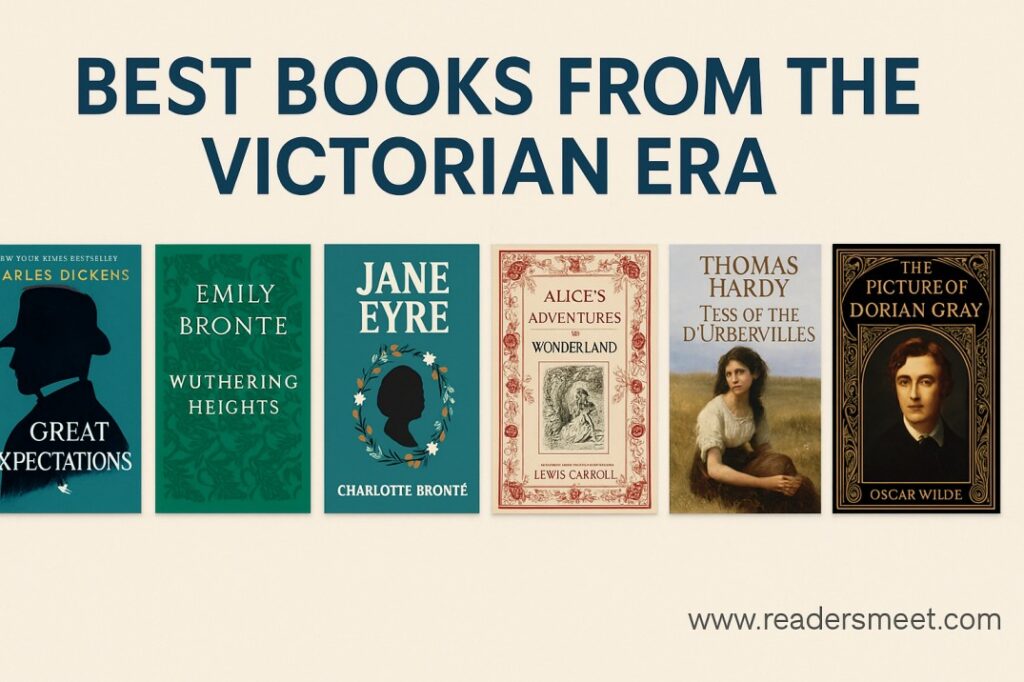
1. Great Expectations by Charles Dickens
A coming-of-age tale about ambition, love, and self-discovery.
2. Jane Eyre by Charlotte Brontë
Romance, feminism, and haunting mystery all in one powerful novel.
3. Wuthering Heights by Emily Brontë
A dark, stormy love story with unforgettable characters.
4. Middlemarch by George Eliot
A masterpiece on marriage, ambition, and idealism.
5. Tess of the d’Urbervilles by Thomas Hardy
Tragic and thought-provoking commentary on purity and societal norms.
6. Dracula by Bram Stoker
Gothic horror at its best – mysterious, thrilling, and deeply symbolic.
7. The Picture of Dorian Gray by Oscar Wilde
A critique of vanity, beauty, and moral decay with Wilde’s trademark wit.
6. Easy Tricks to Remember Features of the Victorian Era
Here’s a quick acronym for MIRAGE-SP to remember key features:
- M: Morality
- I: Individual focus
- R: Realism
- A: Allegory and Symbolism
- G: Gothic elements
- E: Emotion and Sentimentality
- S: Social criticism
- P: Pessimism
Repeat this 3 times and you’ll never forget!
Conclusion
The Victorian Era wasn’t just a chapter in British history—it was a mirror to a changing world. Through powerful characters, emotional depth, and social insight, Victorian writers laid the foundation for modern literature. If you grasp the features of the Victorian Era listed above, you’ll not only ace your exams but fall in love with an era that still resonates today.
Want more study guides like this? Keep exploring ReadersMeet.com!
Also read: 12 Elements of the Renaissance Period